



Why Japan Requires a Different Market Entry Approach
Japan is not a market that brands enter casually.
For B2B companies in premium giftware, Japan represents one of the most design-conscious and quality-driven markets in the world. Buyers expect not only well-designed products, but also consistency, transparency, and long-term reliability from their manufacturing partners.

This is why Winko chose the Tokyo International Gift Show as the first step in our Japan market entry strategy—not as a sales-driven event, but as a strategic learning platform.
1. Japan: A High-Expectation Market for B2B Brands
Japan’s gifting and lifestyle market values details that are often overlooked elsewhere.
Through our research and past collaborations, we see that Japanese buyers place strong emphasis on:
- Material authenticity and surface finishing
- Functional elegance over visual excess
- Product durability and consistency
- Supplier credibility and long-term cooperation
In this context, market entry is not about fast exposure. It is about proving that a brand understands local expectations—and is prepared to meet them.

2. Why Trade Shows Still Matter in B2B Market Entry
In an era of digital sourcing and online catalogs, some question whether trade shows still matter. For B2B market entry—especially in Japan—the answer is clear: they do.
Trade shows provide what digital channels cannot:
- Direct feedback from buyers and retailers
- Real-time evaluation of design, materials, and craftsmanship
- Face-to-face conversations that establish trust
- Cultural insight into how products are perceived locally
For Winko, exhibitions are not about visibility alone. They are about validation.

3. Our Objective at Tokyo International Gift Show
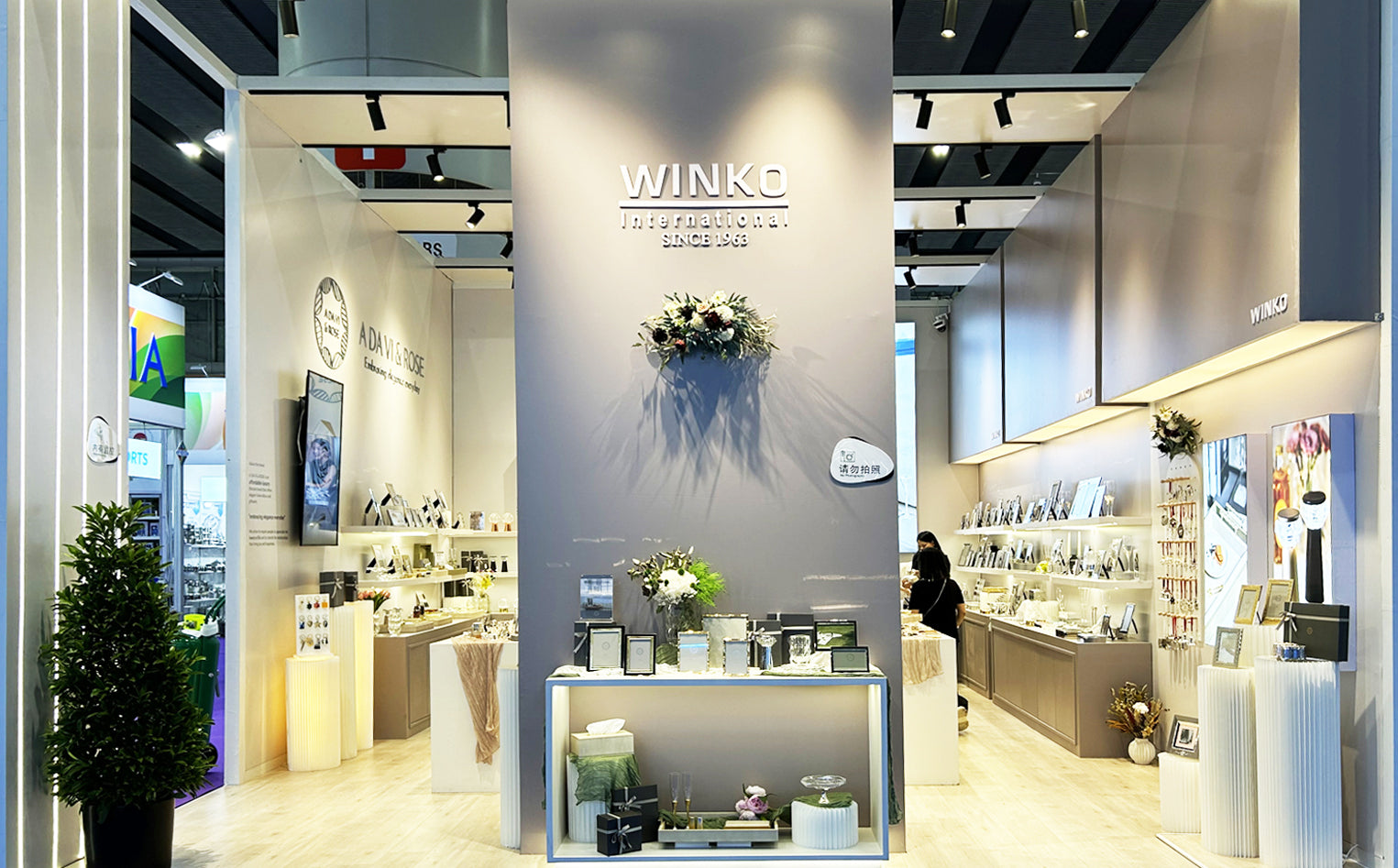
At the 101st Tokyo International Gift Show Spring 2026, our objective is intentionally focused.
Rather than showcasing concepts, we are presenting market-ready collections supported by our ODM/OEM capabilities.
Our goals include:
- Understanding how Japanese buyers respond to different materials and textures
- Evaluating expectations around customization and lead times
- Gathering feedback on finishes, proportions, and functional details
- Initiating conversations built on long-term partnership, not one-off transactions
The exhibition is not the destination—it is the starting point.

4. How Exhibition Feedback Shapes Product Development
One of the most valuable outcomes of trade shows is insight.
Feedback collected on-site directly influences how we approach product development for 2026, including:
- Which surface treatments resonate most with regional buyers
- How modularity and customization should be structured
- Where design refinement is needed for specific markets
- How lead-time expectations differ across regions
Exhibitions allow us to refine products before scaling—reducing risk and increasing relevance.

5. From Exhibition to Market Entry: A Long-Term View
For Winko, market expansion is never a single event.
The Tokyo Gift Show marks the beginning of a longer process that includes:
- Ongoing market research in Japan and Korea
- Selective partner discussions
- Product adaptation based on regional feedback
- Gradual, sustainable market presence
Entering Japan requires patience—and respect for the market.

Why This Matters for Our Partners
For our partners, this approach means products shaped by real market insight—not assumptions.
By using exhibitions as a strategic tool rather than a marketing shortcut, Winko ensures that every market we enter is approached with intention, preparation, and long-term commitment.
This is how we build partnerships that last—and products that truly belong in their markets.