


Ask most buyers what worries them most about a new metal giftware program, and the honest answer usually isn't cost or design — it's the unknown stretch of time between sending a brief and actually holding a finished sample. Without visibility into what happens during that stretch, delays feel random, and buyers have no way to tell whether a supplier's timeline is realistic or optimistic until it's already too late to change course.
This article walks through what actually happens between a brief landing on a metal giftware manufacturer's desk and the first off-tool sample reaching a buyer's hands — not to give you an exact day count, since that varies significantly by product complexity and factory workload, but to give you visibility into the phases themselves, what tends to cause delays at each one, and what questions actually help you plan around a realistic timeline rather than a hopeful one.

Phase One: Brief Review and Feasibility
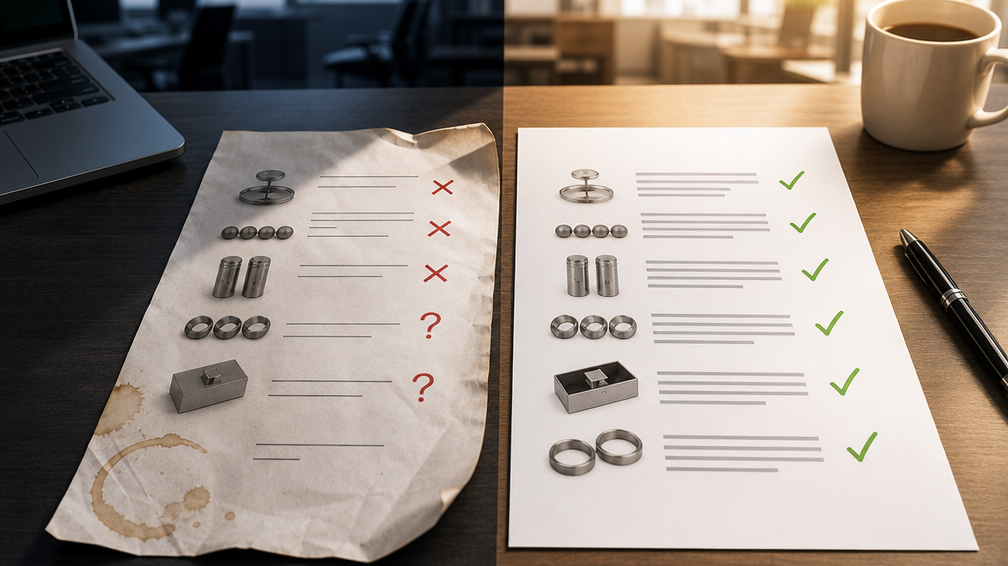
Before any tooling conversation happens, a serious manufacturer reviews the brief for manufacturability — checking whether the design as drawn can actually be produced at the intended cost and volume using the proposed process. This is also where gaps in the brief usually surface: missing tolerances, undefined finishes, or dimensions that don't account for how a specific forming process behaves.
This phase is disproportionately important, because problems caught here are cheap to fix. Problems that surface later — after tooling has started — are not. A supplier who asks detailed clarifying questions at this stage, rather than proceeding straight to a quote, is usually signaling a manufacturer who takes feasibility seriously rather than one who'll discover issues mid-production.

Phase 2: Design for Manufacturability (DFM) Feedback
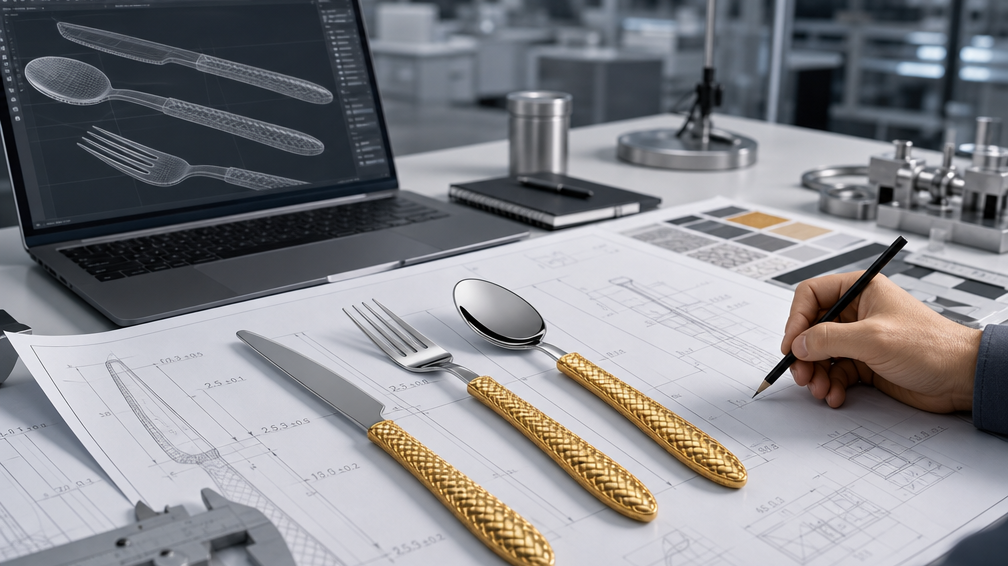
Once feasibility is confirmed in principle, most experienced manufacturers return a DFM review — specific, often unglamorous feedback on how the design should be adjusted to produce reliably at scale. This might mean softening an internal corner radius, adjusting wall thickness for consistent material flow, or flagging a decorative detail that will be difficult to hold in tolerance at volume.
Buyers sometimes treat DFM feedback as a supplier pushing back on their design. It's more useful to treat it as the supplier surfacing constraints now, while changes are still nearly free, instead of after tooling is committed. The DFM conversation is also a good gauge of supplier expertise: specific, technically grounded feedback signals real production experience; vague or absent feedback often signals a supplier who hasn't actually thought through how your specific design will behave in their process.

Phase 3: Tooling Development
This is typically the longest single phase in the timeline, and the one most sensitive to product complexity. A simple, shallow stamped part requires less tooling development time than a multi-cavity die-cast component with fine surface detail. Buyers planning a program with a hard external deadline — a trade show launch, a seasonal retail window — should ask specifically how tooling complexity on their design compares to a simpler baseline product, rather than assuming a generic timeline applies.
This is also where a supplier's current capacity matters more than their theoretical capability. A manufacturer that can technically produce your tooling in a certain timeframe under ideal conditions may be running a queue that pushes your actual start date out considerably. Asking about current tooling queue length, not just typical tooling duration, surfaces this gap before it becomes a surprise.

Phase 4: First Off-Tool Sample
Once tooling is complete, the first parts produced from it — the first off-tool samples — are where a design moves from drawing to physical object for the first time. This is rarely a flawless first pass, even with excellent DFM work upstream; minor adjustments to the tool are a normal part of this stage, not a sign that something went wrong.
What matters most here is how a manufacturer communicates about first-off results. A supplier who proactively flags where the sample deviates from spec, and why, is easier to work with than one who simply ships a sample and waits for the buyer to notice problems. This phase is also where buyers should expect to give detailed, specific feedback — vague approval or rejection slows the next round more than precise notes do.
Phase 5: Sample Revision and Approval
Depending on what the first off-tool sample reveals, this phase can be a quick confirmation or a more involved round of tool adjustment and re-sampling. The single biggest lever buyers have over this phase's length is feedback specificity: a note like "the edge feels rough" takes longer to resolve than "the edge radius on the left corner needs to match the radius on the right corner," because the second version tells the toolmaker exactly what to adjust.

Phase 6: Ramp to Production
Once a sample is approved, moving into full production volume isn't always instantaneous — particularly for products with multiple components or an assembly step. Buyers with a hard delivery deadline should explicitly confirm whether the quoted timeline includes ramp-up time to full production rate, or only the point at which production technically begins, since these can represent meaningfully different delivery dates.
What to Ask a Supplier About Their Timeline
- What does your brief-to-sample process actually look like, phase by phase — not just a single total number?
- How does tooling complexity on my specific design compare to a simpler baseline product you've run?
- What's your current tooling queue, separate from your typical tooling duration?
- Does your quoted timeline include ramp-up to full production volume, or only the point production begins?
- How do you typically communicate first-off sample results — proactively, or only on request?
A supplier who can answer these with specifics, rather than a single confident total, is more likely to hold to the timeline they give you — because they're working from an understanding of where delays actually happen, not just an optimistic estimate.

Planning Your Own Project Timeline
If you're briefing a metal giftware program with a hard deadline attached — a trade show, a seasonal launch, a contractual delivery date — the earlier you understand which phase is likely to consume the most time on your specific design, the more realistically you can plan around it. We're glad to walk through where your project is likely to move quickly, and where it's worth building in buffer.