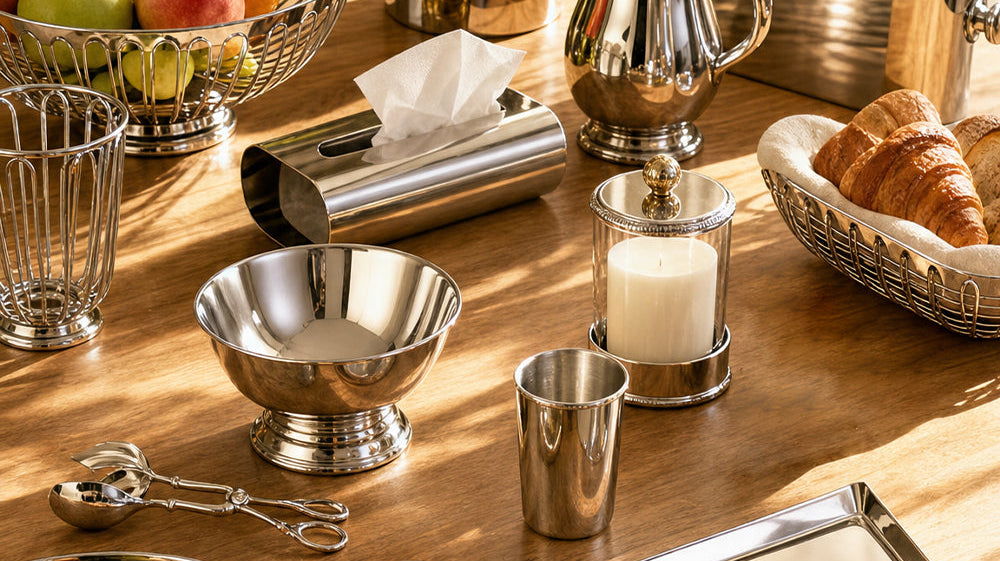
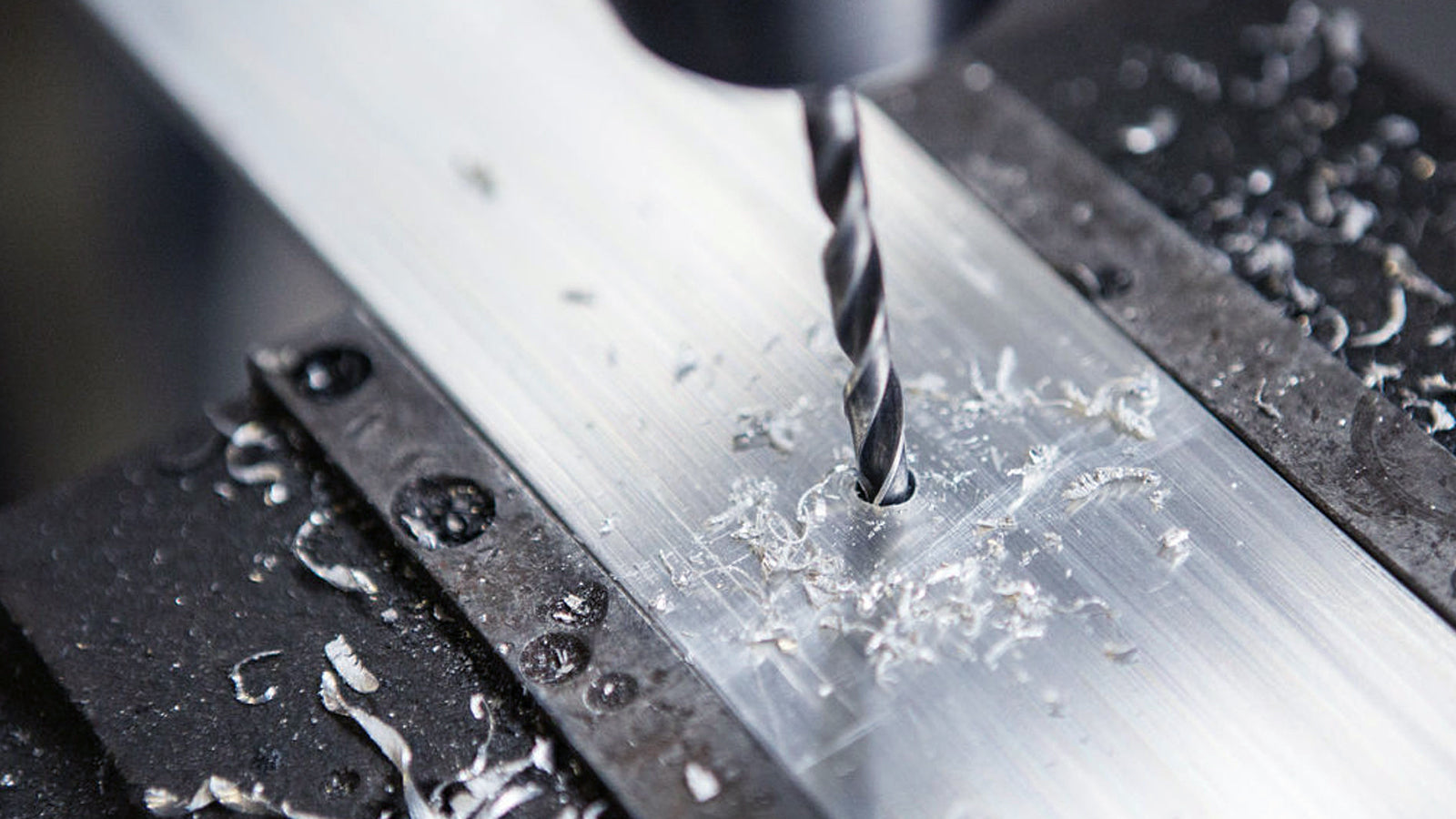
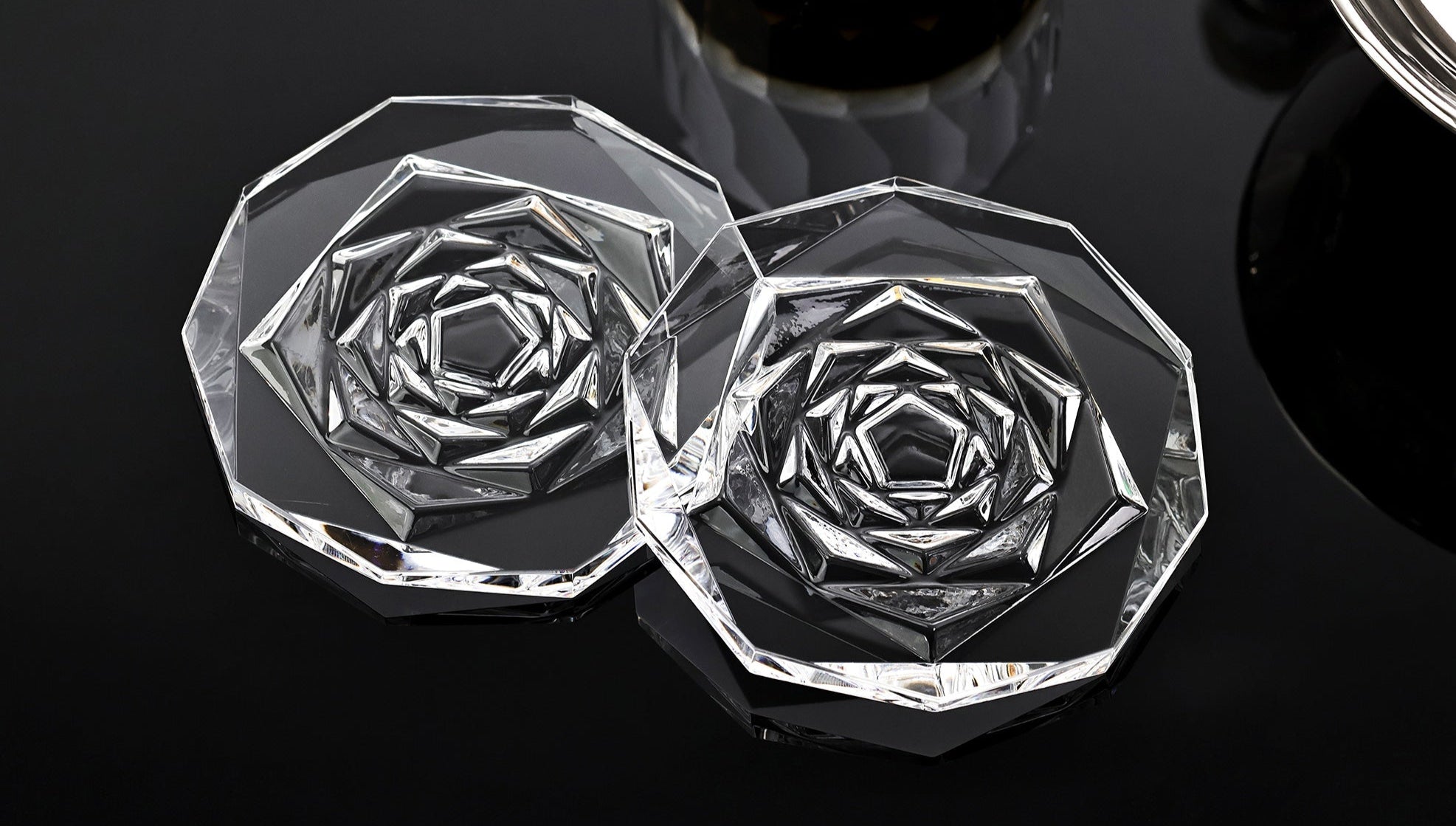
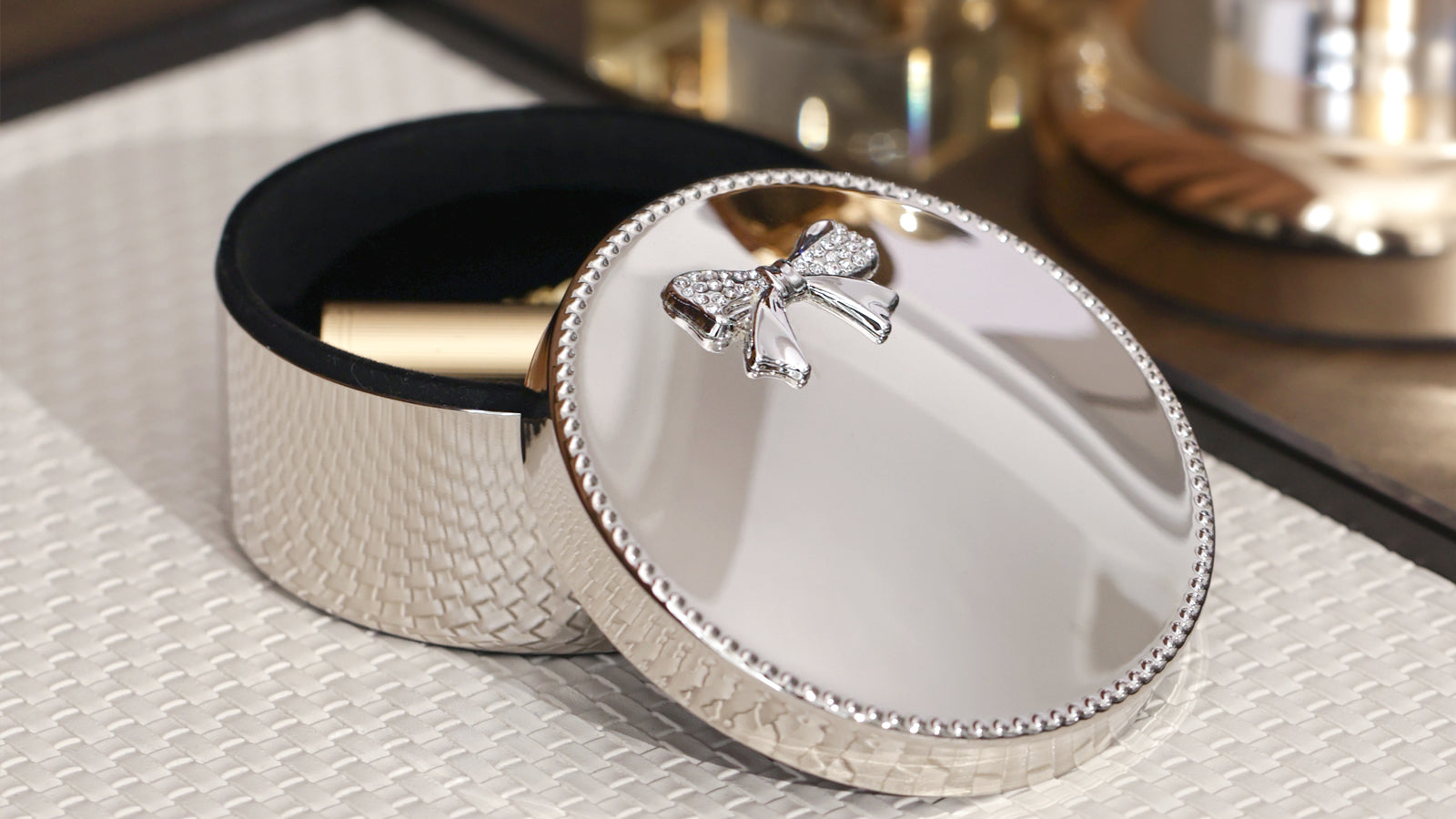
A stainless steel tray can be technically flawless — even gauge, clean stamping, a well-finished edge — and still read as ordinary. What usually separates a good tabletop piece from one that feels genuinely premium isn't the flat surface at all. It's the small dimensional details: a handle with real weight in the hand, a foot with a defined profile instead of a simple bent tab, a logo with actual depth instead of a printed mark. Those details rarely come from stamping. They come from die-casting — which is exactly why most premium tabletop ranges, including ours, are built on both processes working together rather than either one alone.
We've written before about how stamping builds the core of this range, from the flat trays to the tiered stand bodies. This article is about the other half of the story: where a die casting metal giftware manufacturer adds the details that actually influence a buyer's sense of quality — and why those details cost less to add than most buyers assume, if they're planned into the product from the start rather than bolted on afterward.

Why Small Details Carry Disproportionate Weight in Tabletop Products
Buyers rarely evaluate a serving tray or a tiered stand by examining the flat surface closely — surfaces are expected to be clean and even, so a good one barely registers as a positive. What people actually notice, often without being able to articulate it, are the points of contact: where a hand grips a handle, where a foot meets the table, where a logo catches the light. These are almost always the die-cast elements on a hybrid stamped-and-cast product, and they're disproportionately responsible for whether a piece feels considered or generic.

This is the practical reason we treat die-casting as a design decision, not just a manufacturing method. The question isn't "can this part be die-cast" — almost any small dimensional component can be. The question is where die-casting will actually change how a buyer or end user perceives the piece, versus where it would just add cost without adding perceived value.
Where Die-Cast Elements Make the Biggest Difference
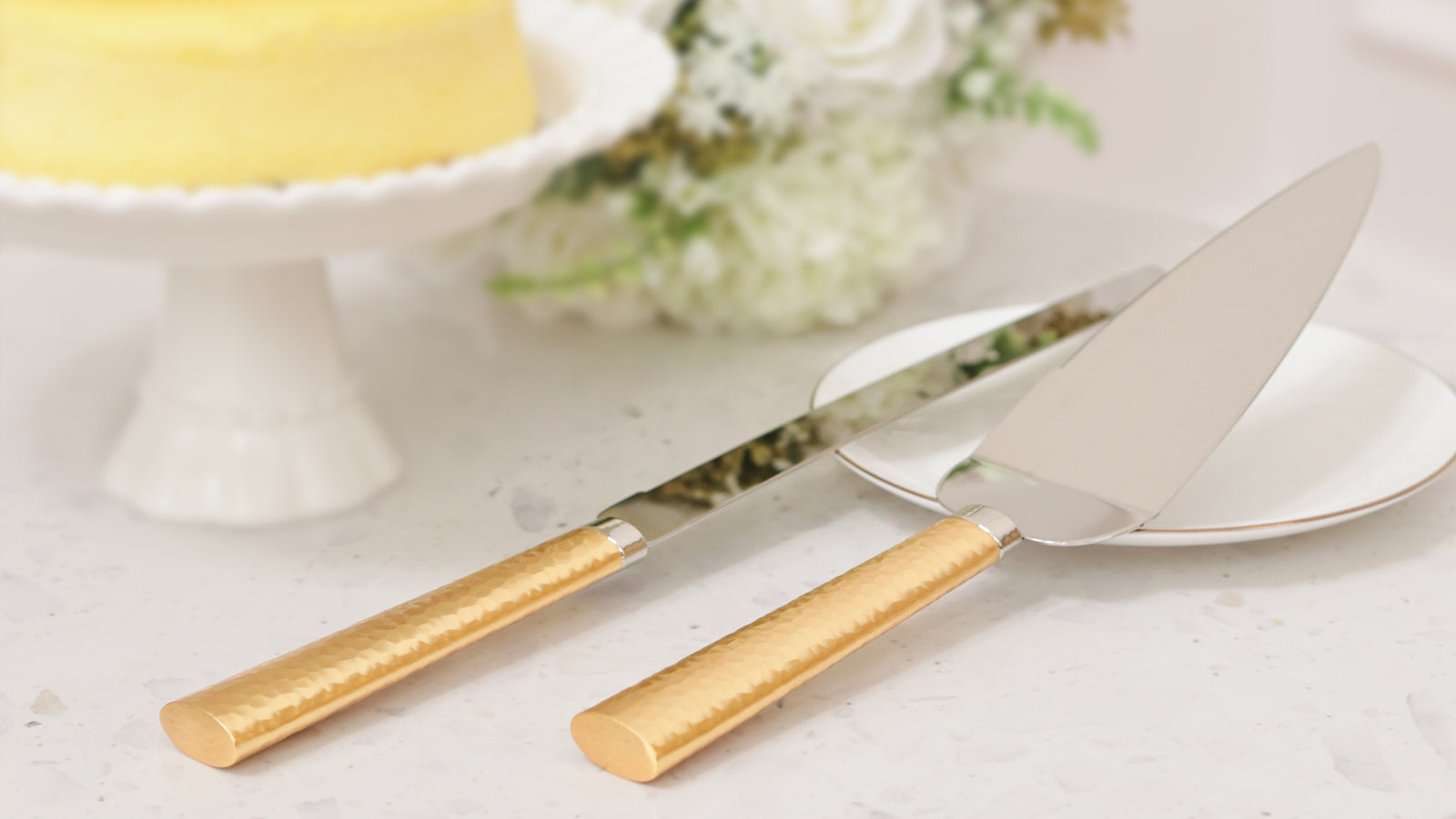
Handles and grips. A stamped or bent-metal handle can be functional, but it rarely has the rounded, substantial feel that reads as premium. A die-cast handle can carry real dimensional shaping — a contoured grip, a deliberate taper, weight distributed where the hand actually rests. This is one of the highest-impact places to invest in die-cast detail, because handles are touched directly, every time the product is used.
Feet and stabilizing bases. Feet on trays and stands do real structural work — they need consistent height and a stable footprint to keep the piece level. Die-casting allows for a feet profile with genuine shape rather than a simple stamped or formed tab, which affects both stability and how the underside of the piece looks when it's lifted or turned over — a moment of inspection buyers and end users go through more often than suppliers usually assume.

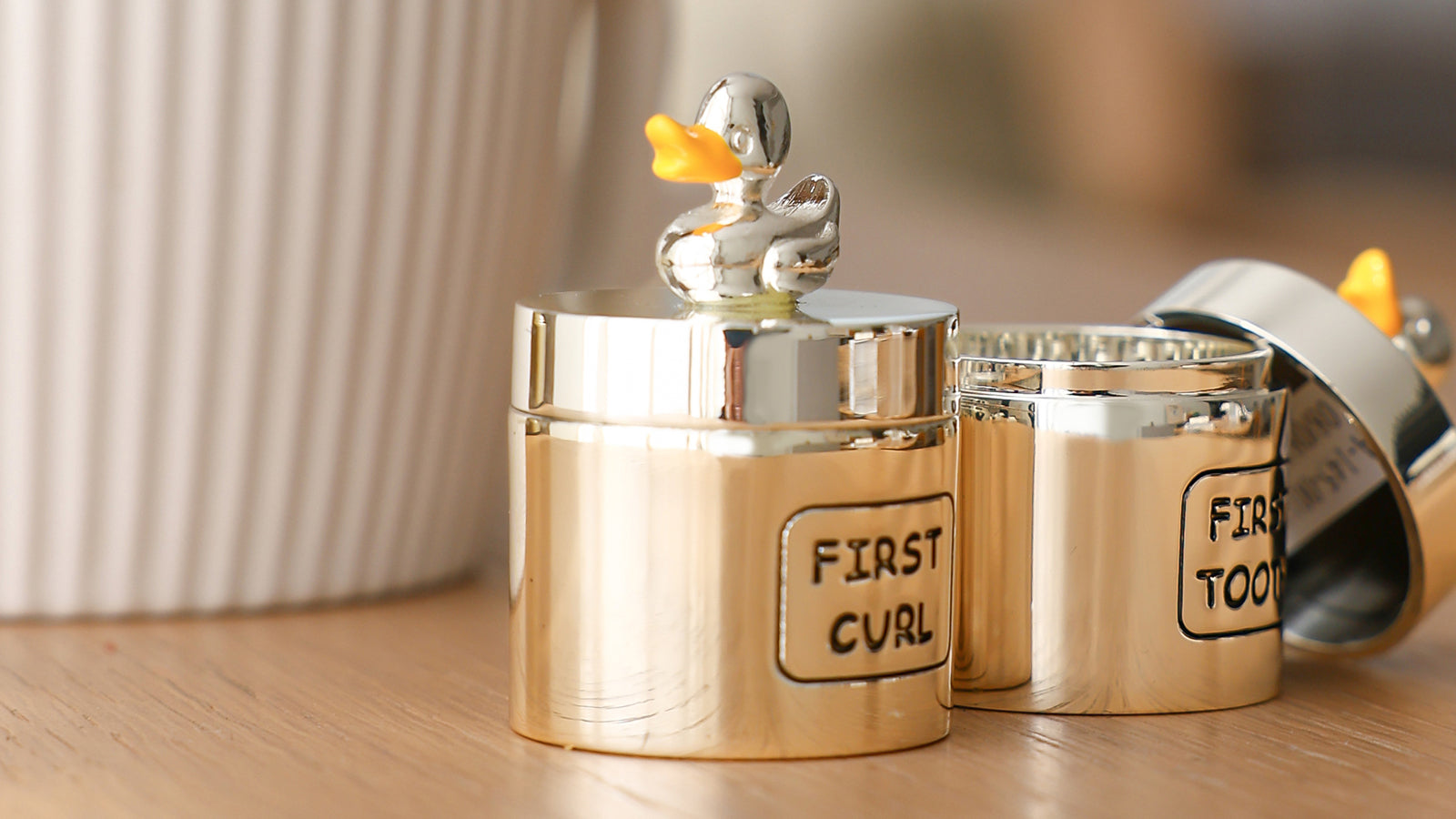
Logos and brand marks. A printed or etched logo sits flat on the surface. A die-cast logo element has actual relief — it catches light differently depending on the angle, and it reads immediately as a considered design choice rather than an afterthought. For corporate gifting programs specifically, this is often the single detail that most affects how a recipient perceives the value of the piece in hand.
Connective hardware on multi-piece products. The central post on a tiered stand is a good example: it needs to carry real structural load while also being a visible design element, since it's the part of the piece most exposed to view. Die-casting lets that post carry both a load-bearing profile and a finished decorative shape in the same component, rather than requiring a separate structural piece hidden under a decorative cover.

How This Plays Out on Our Stainless Steel Tabletop Range
Across the range, we apply die-cast elements selectively rather than by default — the flat and shallow-formed bodies stay stamped, since that's where stamping's consistency advantage matters most, and die-casting is reserved for the specific points where dimensional detail actually changes how the piece is perceived or how it performs structurally. The tiered stand's central post is die-cast. The decorative feet on select serving trays are die-cast. The tray bodies themselves are not, because there's no perceptual or structural benefit to casting a flat surface that stamping already produces cleanly and efficiently.
That selectivity matters for cost as much as design. Die-casting a whole product where only the details need it adds cost without adding value; skipping die-cast detail where it does matter costs a range its premium feel for very little savings. The goal is matching each component to the process that actually earns its place in the finished piece.

What to Ask a Manufacturer About Die-Cast Detail
If you're briefing a metal tabletop or giftware program and want to evaluate how a supplier approaches this, a few questions tend to reveal a lot:
Which specific components do you recommend die-casting, and why those and not others?
How do you decide when a stamped or bent-metal detail is sufficient versus where die-casting is worth the added cost?
Can you show finished samples where die-cast and stamped elements are joined, so that I can evaluate the connection quality directly?
A supplier who can answer these with product-specific reasoning — rather than a general "we do both processes" — is more likely to have actually thought through where detail belongs in your specific product, not just what their factory happens to be equipped to run.

Where This Leaves the Range
Detail is what turns a technically correct tray into a piece that feels worth the price point — and it's rarely the flat surface doing that work. It's the handle, the foot, the logo, the post: small, dimensionally complex elements that stamping can't produce on its own, and that die-casting adds without requiring the whole product to be built through a slower, more expensive process. Next week, we'll step back from process and look at where stainless steel itself — as a material choice — genuinely wins for tabletop programs, and where buyers should think twice before defaulting to it.