
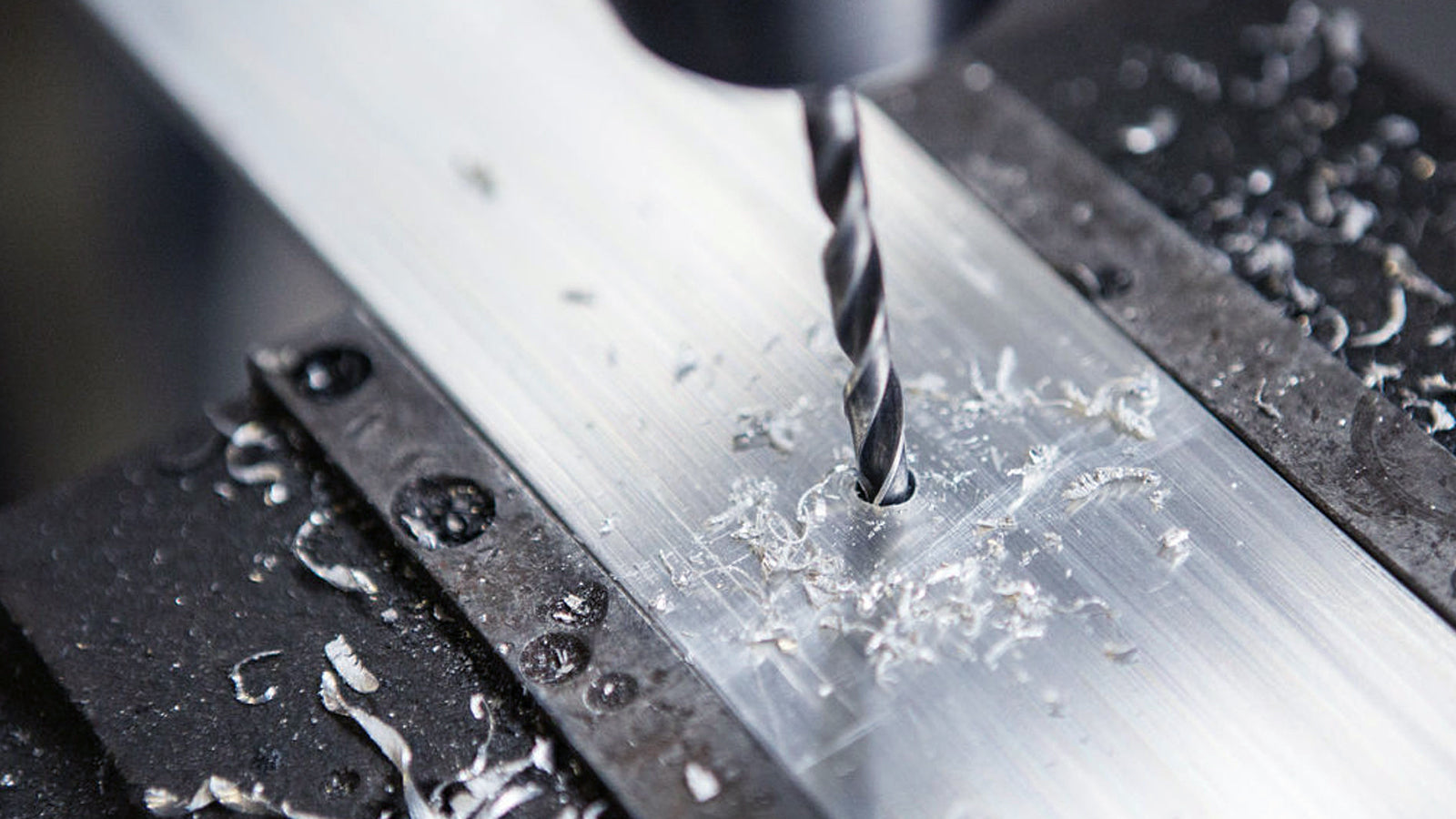






Most buyers evaluating a stainless steel tabletop manufacturer are really asking one question: can this supplier deliver a coordinated range — not just a single well-made tray, but a full set where every piece looks and feels like it belongs together, at a volume that makes sense for hospitality and corporate gifting procurement. That kind of consistency doesn't come from good design alone. It comes from the production line underneath it.
We've covered what stamping is and which products it generally suits in an earlier guide. This article goes further: it's what actually happens on our floor to turn stainless steel stock into a coordinated tabletop range — the tooling decisions, the sourcing logic, and the points in the process where a small choice early on determines whether a set of five trays looks like a matched collection or five trays that happen to be similar.

What Makes a Stainless Steel Tabletop Manufacturer's Process Different
When we started engineering our stainless steel tabletop range, the brief wasn't "make some trays." It was: build a coordinated set — coasters, single-tier trays, tiered stands — where every piece shares the same visual language. As a custom-stamped stainless steel tray manufacturer, that starts with how material moves through the line, not just how each piece is designed.
Most of the range starts as coiled stainless steel stock rather than pre-cut sheet — a choice that matters more than it might seem. Coil feeding lets us run continuous production without the downtime of manually loading individual blanks, which is part of why we can hold consistent per-unit cost even as order volumes scale. The coil is fed through a blanking stage first, where flat discs or rectangles are cut to the rough outer dimension of whatever piece is coming next — a coaster, a tray base, a tier plate.

How Gauge Selection Affects Product Quality
The grade and thickness of stainless steel specified across this range is deliberately varied by piece, rather than defaulting to a single spec for everything. Coasters and single-tier trays are run in a lighter-gauge stock suited to their size and handling; the tiered stands, which carry more structural load once assembled, step up to a heavier gauge on the tier plates themselves. That variation isn't arbitrary — each piece is specified to the band where we get a clean draw without excess material cost, and where the finished piece has the weight and rigidity that reads as premium the moment someone picks it up. Buyers rarely ask about gauge directly, but they notice its absence immediately: a tray that feels thin or flexes under light pressure is almost always a gauge decision made too conservatively upstream.

Why Tolerance Standards Matter for a Coordinated Range
Here's the part of the process most buyers never see, but every buyer eventually feels: die tooling for this range is built to hold tight dimensional tolerances on every critical dimension — outer diameter on coasters, tray depth, tier plate flatness. That standard sounds abstract until you consider what it prevents. A coaster set with visibly inconsistent dimensions between pieces will wobble when stacked. A tiered stand where the tier plates aren't held flat won't sit level on its post, and that misalignment compounds visibly the higher the stack goes.
This is also where sourcing a coordinated range — as opposed to a single product — gets harder to execute well, and where a lot of suppliers cut corners without buyers noticing until the product is in hand. Every piece in the range shares design language: a consistent edge radius, a matched rim profile, the same relationship between wall angle and base flatness. Holding that consistency across five or six different SKUs means the tooling for each piece has to be engineered against the same reference standards, not just against its own individual spec sheet.

The Forming Stage: Where Design Depth Becomes a Real Constraint
Once blanked, each piece moves to the forming die, where the flat blank is drawn into its final shallow profile in a single press stroke. This is the stage where the range's design intentionally stays within stamping's comfort zone. Every piece is a shallow draw, meaning the depth-to-width ratio stays conservative enough that the metal thins evenly rather than stressing at the corners.
That constraint shaped real design decisions on this range, not just theoretical ones. An earlier concept for the tiered stand called for a deeper bowl profile on the top tier, closer to a shallow serving dish than a flat presentation tray. In testing, that depth pushed corner thinning past what we consider acceptable for consistent wall strength — the kind of thinning that doesn't fail immediately but shows up later as a weak point under repeated handling. We revised the profile to a shallower draw and moved the visual interest to the rim detail instead.

Edge Finishing, Built Into the Die
Edge treatment — rolled, beveled, or straight-cut — is finished as part of the same die stroke that forms the piece, not as a separate secondary operation. This keeps edge quality consistent across every unit, and it's a meaningful part of why we can hold pricing where we do on this range: every operation folded into the primary die stroke is one less handling step and one less line item in the cost stack.
The rolled edge used across most of the range — a soft, rounded profile rather than a sharp cut edge — was chosen specifically for the tactile experience in hospitality and gifting contexts, where pieces are handled directly and frequently.

Where Stamping Hands Off to Die-Casting
Not every component in the range comes off the stamping line as a finished part. The tiered stand's central post and the decorative feet on select serving trays are die-cast separately and joined to the stamped tray bodies during assembly. Stamping builds what it does best: the flat and shallow-formed bodies that carry the range's visual consistency. Die-casting contributes the structural and decorative elements that need dimensional depth stamping can't deliver cleanly. We cover how die-casting elevates this range in detail in next week's article.
What This Means for Buyers Evaluating a Manufacturer
None of these are dramatic decisions on their own — a gauge choice here, a tolerance standard held there, an edge profile built into the die instead of finished separately. But stacked together across every SKU in the range, they're the actual reason a five-piece stainless steel tabletop set reads as a coordinated collection rather than five trays that happen to share a material.
If you're evaluating a stainless steel tabletop manufacturer or OEM metal giftware supplier and want to understand what's actually driving the quote you're looking at, ask about gauge selection logic, tolerance standards, and where edge finishing happens in the process. The answers tell you more about the finished product than the spec sheet usually does.